
Men’s health checks after 50: what screening actually makes sense

Men's health checks after 50: what screening actually makes sense
Turning 50 brings a wave of advice about what to check and when. Some of it is genuinely useful; a lot of it is generic noise. Here's a clearer picture of what tends to matter for men's urological health specifically, and how a private review usually works.
Quick answer
There is no single UK national screening programme for prostate cancer, so the checks that matter most after 50 are usually a conversation, not a fixed checklist: your family history, any urinary symptoms, and whether a PSA blood test is right for you.
A private consultant review brings these together in one appointment, rather than leaving you to work out which check to book and where.
Why age 50 is a reasonable starting point
Risk of prostate conditions, from benign enlargement (BPH) to prostate cancer, rises with age. Fifty is commonly used as a starting point for that conversation, earlier if you have a father or brother with prostate cancer, or if you are of Black African or Black Caribbean ethnicity, where risk is higher.
This doesn't mean something is wrong. It means it's a sensible point to establish a baseline and understand your own risk profile, rather than waiting for symptoms to force the issue.
What a private review usually covers
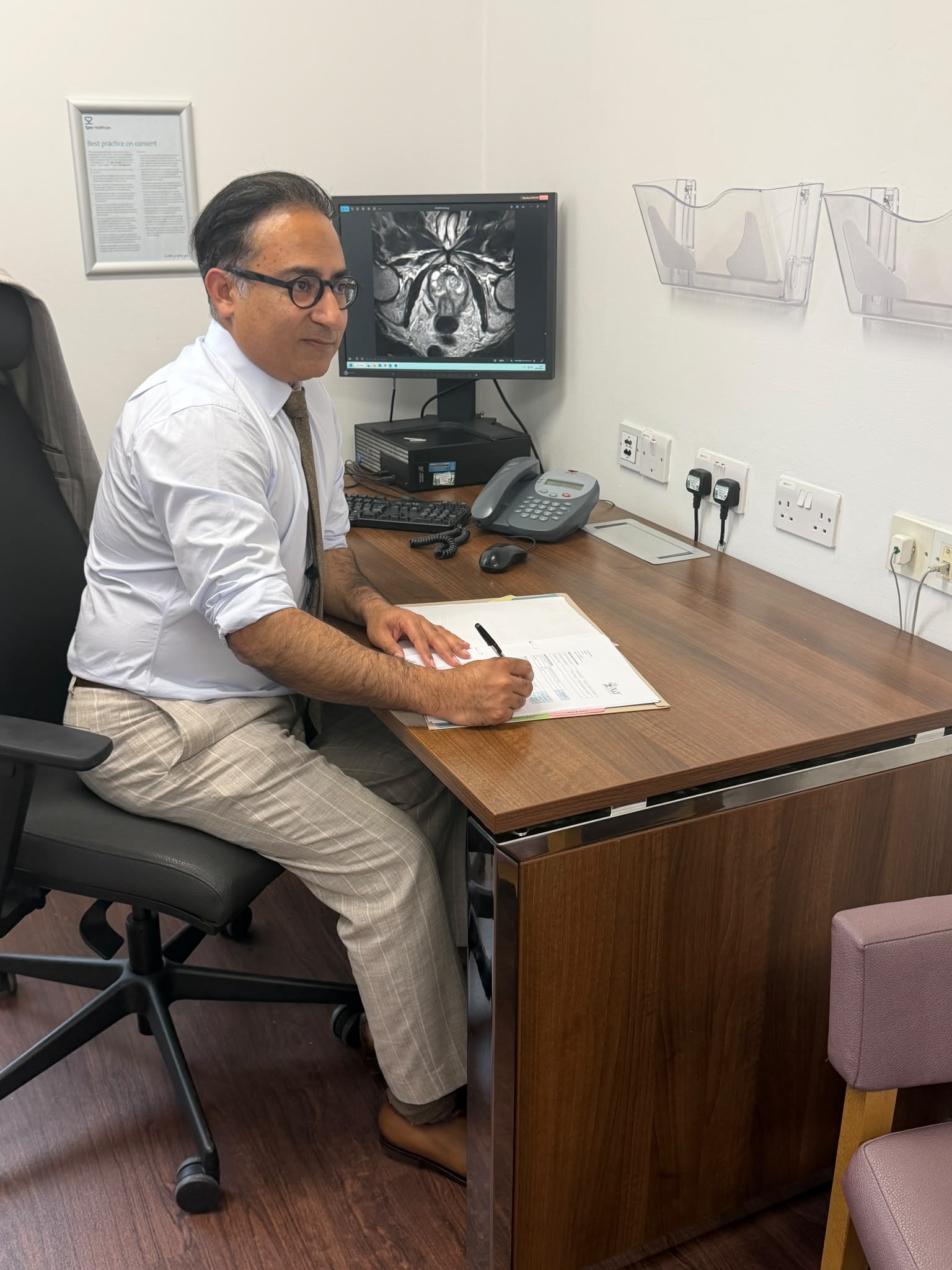
A first consultation typically includes a discussion of urinary symptoms (flow, frequency, night-time urination), family history, and general health, followed by a PSA blood test if appropriate and, where relevant, a physical examination.
If anything warrants closer investigation, next steps such as an MRI or further tests can usually be arranged quickly, without waiting between separate referrals.
Key points
- Family history of prostate cancer is one of the strongest reasons to start checks earlier than 50.
- A raised PSA on its own is not a diagnosis. It's a prompt for further assessment.
- Urinary symptoms (weak flow, urgency, waking at night to urinate) are worth mentioning even if they feel minor.
- Self-pay patients generally don't need a GP referral to book a private consultant review.
Ready to talk to a consultant urologist?
Private consultant-led appointments in Birmingham and the West Midlands. Self-pay and insured patients welcome; no GP referral needed for self-pay.
Book a private consultation ›Common questions
Do I need a GP referral for a private PSA test?
Self-pay patients usually don't need a GP referral, though insurer rules can differ if you're using private medical insurance. It's worth checking your policy terms first.
What does a raised PSA actually mean?
A number of things can raise PSA, including an enlarged prostate, infection or inflammation, not only cancer. A raised result is a reason for further assessment, not a diagnosis in itself.
How often should I be checked?
This depends on your individual risk factors and any previous results. It's best discussed directly during a consultation rather than following a generic interval.

Mr Syed Ali Shahzad
Consultant Urological and Robotic Surgeon · GMC 6071731 · FRCS Urol, FEBU · Full profile ›
General information only. It should not replace personalised advice from a qualified clinician. Last updated 12 July 2026.