

Benign prostate enlargement
Aquablation aims to improve urinary flow by removing the prostate tissue causing obstruction.
Prostate care · Patient guide
A clear explanation of how waterjet treatment for an enlarged prostate works, what the surgeon controls, and when it may be possible to go home on the same day.
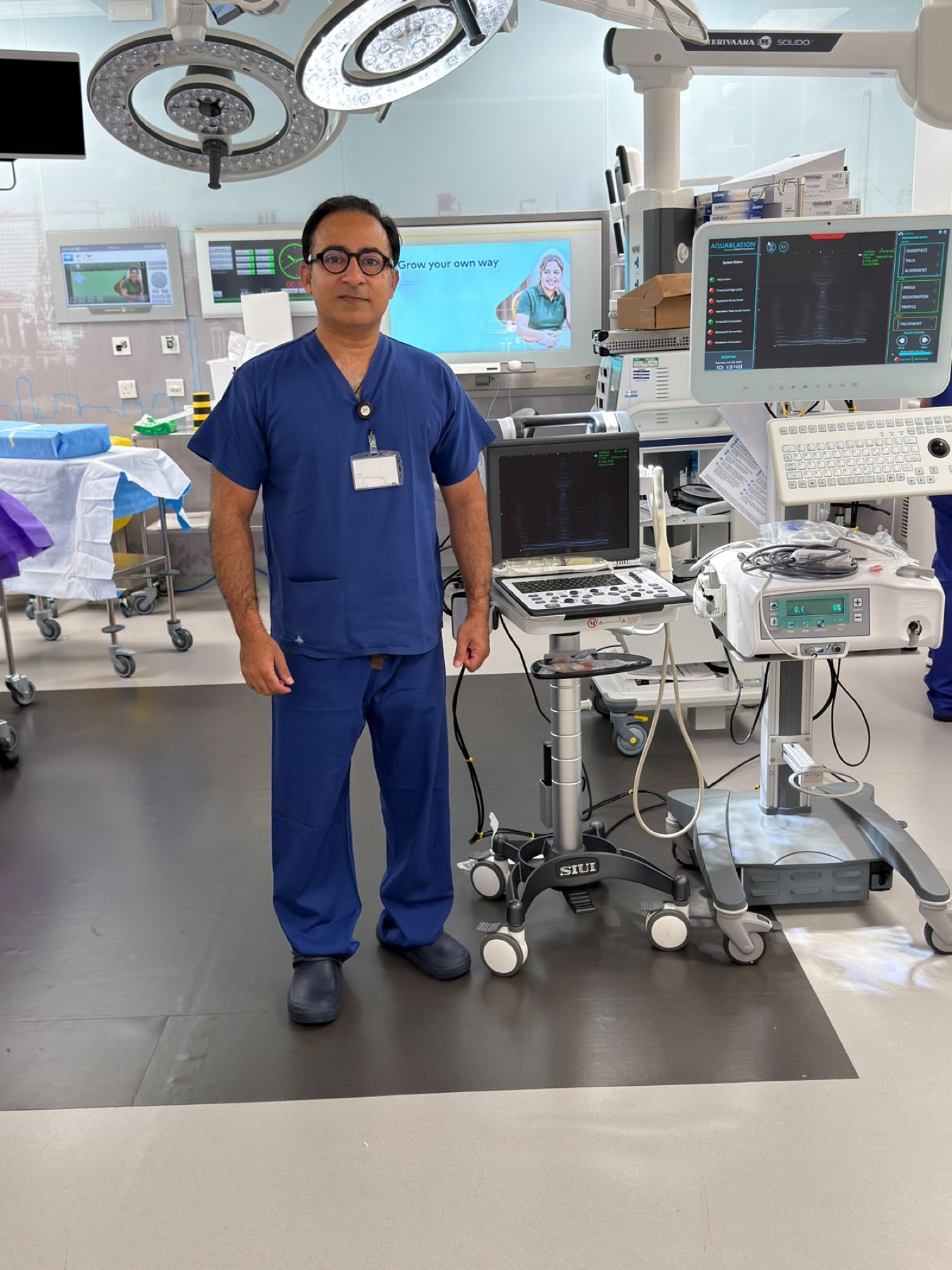
Aquablation aims to improve urinary flow by removing the prostate tissue causing obstruction.
The surgeon uses live views to plan treatment; the robotic system then follows the approved plan.
Day-case discharge may be possible after safe recovery checks. An overnight stay is sometimes needed.
Aquablation is a treatment for urinary symptoms caused by a non-cancerous enlarged prostate, also called benign prostatic hyperplasia or BPH. The prostate sits below the bladder and surrounds the urethra—the tube that carries urine out of the body. When the prostate enlarges, it can squeeze this tube and make it harder for the bladder to empty.
Symptoms can include a weak or interrupted stream, difficulty getting started, passing urine frequently or urgently, getting up several times at night, a feeling that the bladder has not emptied, or urinary retention.
These symptoms are not always caused by BPH, so assessment comes first. This may include a symptom score, urine test, PSA blood test where appropriate, urine-flow test, bladder scan and imaging or cystoscopy depending on your circumstances. Read more about benign prostate enlargement.
The HYDROS Robotic System is a newer platform from PROCEPT BioRobotics for delivering Aquablation therapy. It brings real-time ultrasound, direct camera views and computer-assisted treatment planning together in one system.
The phrase “AI-powered” can sound as if a machine makes the decisions. It does not. The software supports image recognition and planning; the surgeon remains responsible for checking the anatomy, changing the suggested plan where needed, and starting or stopping treatment.
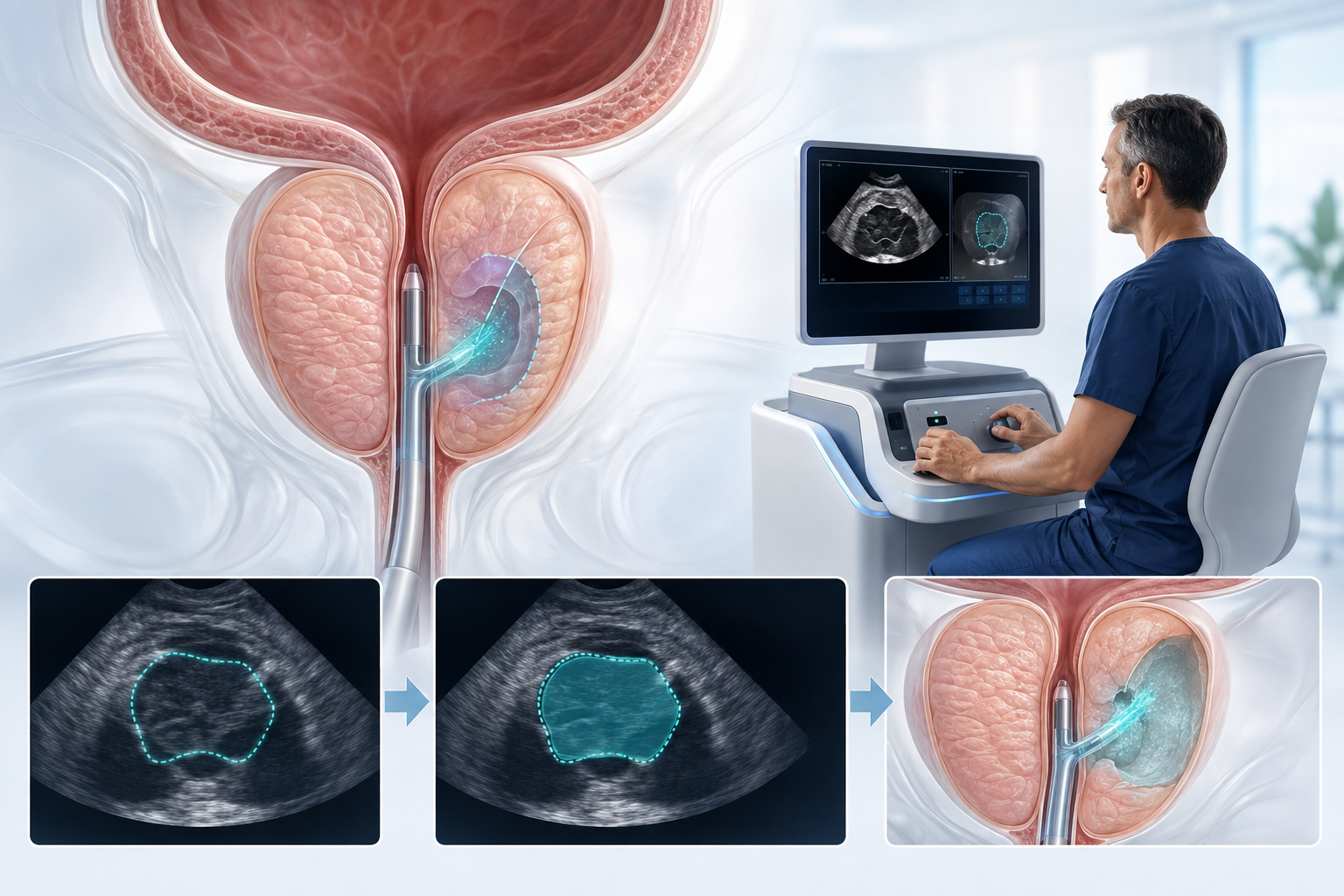
This manufacturer animation explains the imaging, planning and waterjet stages. It is for general education; the exact procedure and equipment used are confirmed by your treating hospital.
Aquablation is usually performed under a general or spinal anaesthetic. You lie on your back with your legs supported. Nothing is cut through the skin.
A slim telescope is passed through the urethra, and an ultrasound probe is placed in the rectum. Together, these views show the prostate, bladder neck and tissue causing the blockage.
The surgeon marks the tissue to remove and structures to protect. On HYDROS, computer-assisted image recognition can suggest landmarks. The surgeon reviews and can alter every part of the plan.
The robotic system follows the approved plan and directs a high-velocity jet of sterile fluid at the obstructing tissue, creating a wider channel for urine.
Loose tissue is cleared and the surgeon checks carefully for bleeding. Focused cautery may be used. A catheter is normally left in the bladder and irrigation may run through it for a few hours.
Day case means that you are admitted, have the operation and return home on the same calendar day. It does not necessarily mean going home without a catheter.

You should be medically stable, comfortable on suitable pain relief, able to eat and drink, and have acceptable urine drainage. You need clear catheter instructions, suitable support at home and a plan for contacting the team if a problem develops.
You may stay overnight if there is heavier bleeding, troublesome nausea, a medical or anaesthetic concern, a late finish, difficulty with catheter drainage, or if the team feels that further observation is safer. Needing an overnight stay does not mean the operation has failed.
The decision is personalised. Prostate size alone does not decide whether you can go home on the same day. The team may consider whether:
NICE guidance says transurethral waterjet ablation can be used for lower urinary tract symptoms caused by BPH because it works well and there are no serious concerns about its safety when usual clinical governance, consent and audit arrangements are in place.
In the WATER randomised trial, Aquablation produced lasting improvement in urinary symptoms and flow at five years, with less procedure-related ejaculatory dysfunction than TURP. In the WATER II study of larger prostates measuring 80–150 mL, symptom improvement remained substantial at five years and 96.3% of patients had not needed another BPH operation.
These long-term studies evaluate Aquablation therapy as a procedure. They should not be interpreted as a head-to-head trial proving that the newer HYDROS platform gives better clinical outcomes than the earlier AquaBeam system.
Evidence for day-case Aquablation is encouraging but still developing. In one UK report involving 40 selected patients, 37 went home on the day of surgery and three stayed overnight. This was a small, single-centre experience, so it supports feasibility rather than guaranteeing same-day discharge for every patient or hospital.
All prostate operations have risks. Your surgeon will explain how these apply to you. Possible issues after Aquablation include:
Aquablation is associated with a better chance of preserving ejaculation than some traditional prostate operations, but preservation cannot be guaranteed. Erections are usually unaffected, although any procedure can have individual effects.
It is common to notice some blood in the urine, mild stinging, frequency or urgency during the early recovery period. Symptoms can fluctuate as healing progresses.
Many people with desk-based work need around one to two weeks away, while heavier work and vigorous exercise usually require longer. Your surgeon’s advice takes priority because recovery varies with prostate size, bleeding, general health and the amount of tissue treated. For more detail, see the Aquablation comparison and recovery guide.
No. The system supports imaging, planning and precise execution, but the surgeon checks the anatomy, defines or adjusts the treatment plan and remains in control throughout.
Aquablation is the treatment. HYDROS is a newer robotic platform that can be used to deliver that treatment.
No. Day-case discharge is possible for selected patients who meet safety criteria after surgery. An overnight stay may be recommended if you need longer observation.
Many patients do. It is usually temporary and removed after a few days, but the exact plan depends on your operation and recovery.
Aquablation has a lower rate of ejaculatory problems than TURP in clinical trials, but no technique can guarantee normal ejaculation for every patient.
Clinical studies include prostate sizes from 30 mL to 150 mL. Suitability still depends on prostate shape, symptoms, other health conditions and your treatment priorities.
No. It treats urinary obstruction caused by benign prostate enlargement. If PSA, examination or imaging raises concern about cancer, that requires a separate diagnostic pathway.
A consultation with Mr Syed Ali Shahzad can help establish the cause of your urinary symptoms and compare Aquablation with medication, Rezum, UroLift, TURP, laser surgery and other appropriate options. If Aquablation is suitable, the hospital, robotic platform, catheter plan and whether day-case discharge is realistic will be confirmed for your individual procedure.
Aquablation, HYDROS and FirstAssist AI are trademarks of PROCEPT BioRobotics.