

HYDROS Aquablation launches at West Midlands Hospital
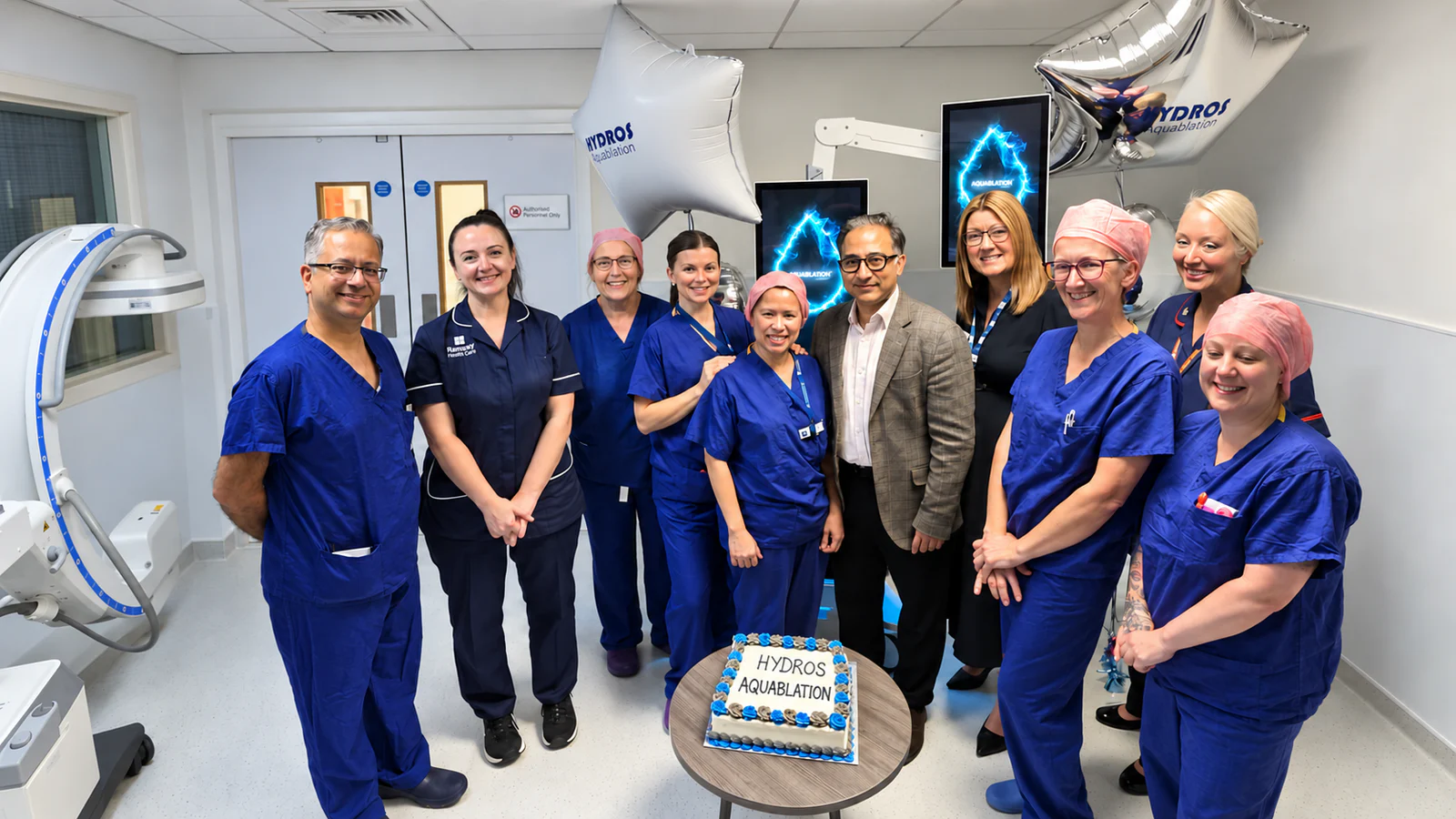
Mr Syed Ali Shahzad and Ramsay theatre teams mark a new local treatment pathway, with assessment access through West Midlands Hospital and Stourside Hospital.
Halesowen and Stourbridge
Specialist prostate assessment through two Ramsay hospital locations.
Surgeon-led waterjet therapy
Live imaging, treatment planning and controlled removal of obstructing tissue.
Assessment comes first
Aquablation is compared with medicines and other procedures for each patient.
Mr Syed Ali Shahzad and the Ramsay theatre teams have marked the introduction of the HYDROS robotic system for Aquablation therapy at West Midlands Hospital. Mr Shahzad also sees patients at Stourside Hospital in Stourbridge, helping men across Halesowen, Stourbridge and the wider West Midlands access assessment for troublesome urinary symptoms and benign prostate enlargement.
Launch announcement on LinkedIn
Kate Leddington, Business Relations Manager for West Midlands Hospital and Stourside Hospital, shared an update announcing completion of West Midlands Hospital’s first HYDROS Aquablation theatre list with Mr Syed Ali Shahzad and support from PROCEPT BioRobotics.
What this development means for patients
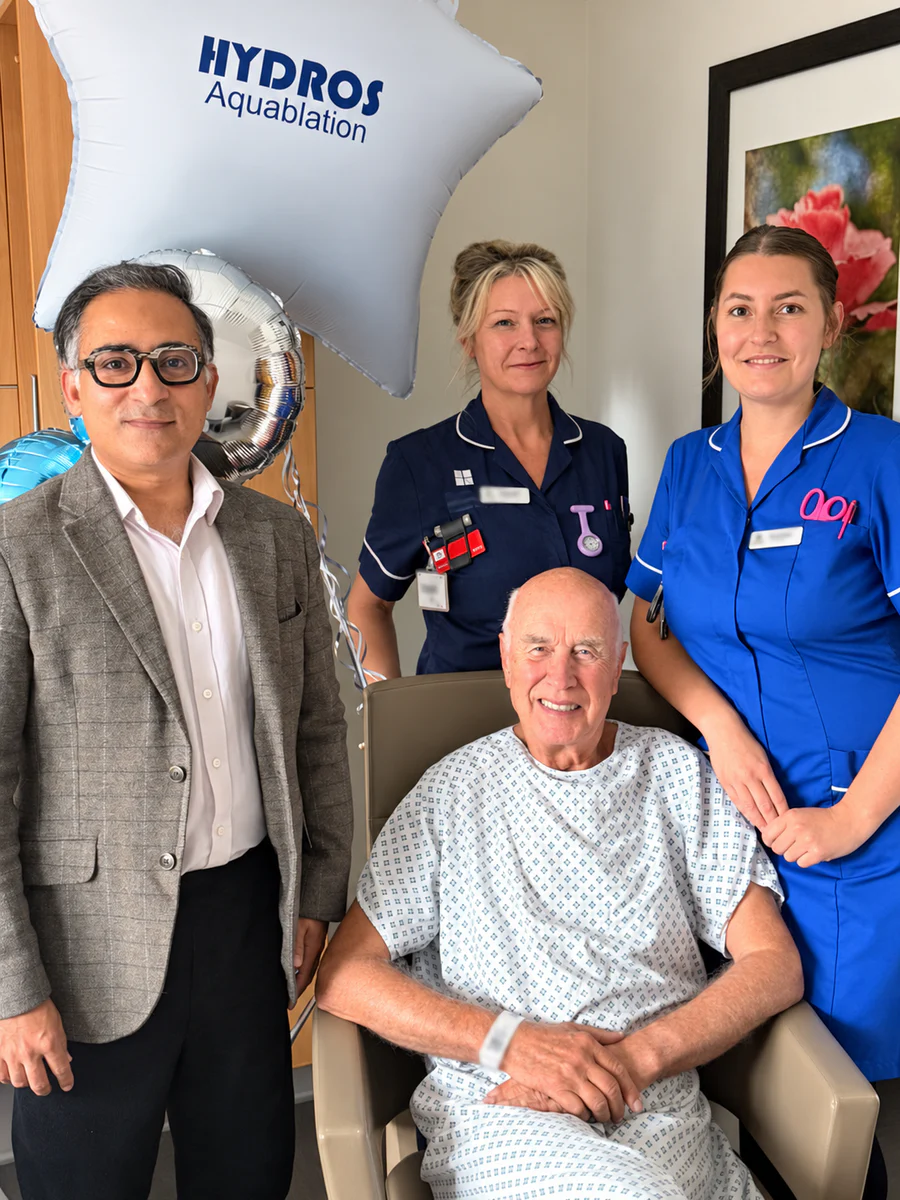
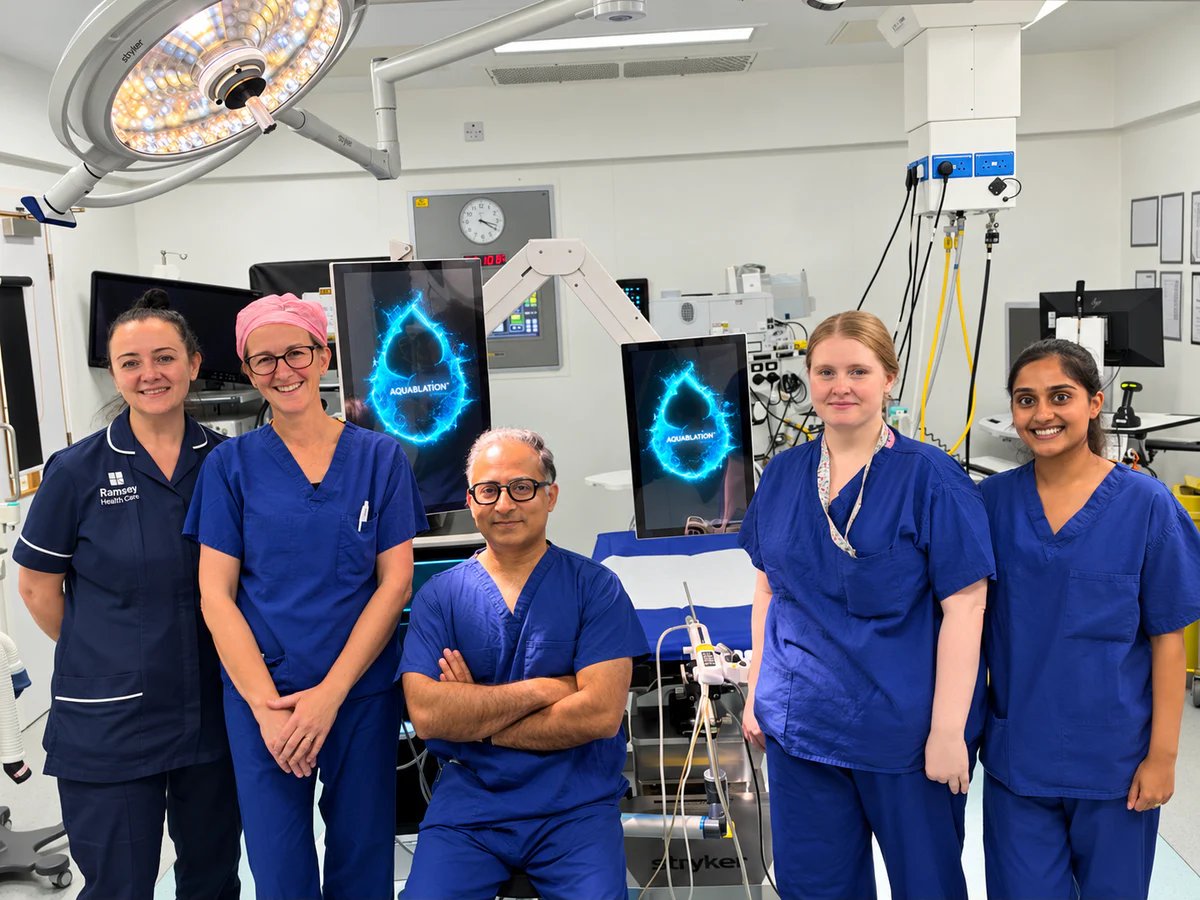
Introducing a new surgical system is a team effort. It requires trained theatre staff, anaesthetic support, specialist nursing, equipment preparation, patient information and a clear follow-up pathway. The launch photographs recognise the multidisciplinary teams involved in developing that service.
For patients, the practical benefit is greater local access to a modern treatment option for urinary obstruction caused by a non-cancerous enlarged prostate, also known as benign prostatic hyperplasia or BPH.
What is HYDROS Aquablation?
Aquablation is a treatment for urinary obstruction caused by BPH. It combines real-time imaging, surgeon-led treatment planning and a robotically controlled high-pressure waterjet to remove selected prostate tissue.
HYDROS is a newer robotic platform used to deliver Aquablation therapy. Its planning software can help identify anatomical landmarks and suggest a treatment outline. The surgeon checks the anatomy, adjusts or defines the plan and remains responsible for the procedure. The system does not diagnose the patient or decide independently what tissue should be treated.
The prostate tissue is removed using a heat-free waterjet. Other methods, including cautery, may still be used afterwards to control bleeding.
How HYDROS Aquablation works | Aquablation treatment page
Who may benefit from an assessment?
It may be worth arranging an assessment if urinary symptoms are persistent, worsening or affecting sleep and everyday life. Symptoms can include:
- a weak or interrupted urinary stream;
- difficulty starting to pass urine;
- urgency or needing to pass urine frequently;
- getting up several times during the night;
- feeling that the bladder has not emptied; or
- episodes of urinary retention.
These symptoms are not always caused by prostate enlargement. Infection, bladder conditions, medication and other health problems can produce similar changes, so establishing the cause comes before choosing a treatment.
Access through two Ramsay hospital locations
West Midlands Hospital
West Midlands Hospital now offers the HYDROS Robotic System for Aquablation therapy. Mr Shahzad is listed by Ramsay Health Care as an Aquablation specialist at the hospital.
Stourside Hospital
Mr Shahzad also consults at Stourside Hospital. If Aquablation is suitable, the treating hospital and equipment are confirmed as part of the individual care plan.

What happens before treatment is recommended?
A consultation begins with the symptoms and what matters most to the patient. Assessment may include a symptom questionnaire, urine test, PSA blood test where appropriate, urine-flow test, bladder scan, and imaging or cystoscopy depending on the clinical circumstances.
Mr Shahzad then explains the reasonable options, including their likely benefits, limitations, recovery, catheter requirements and possible effects on ejaculation, erections and bladder control. Aquablation may reduce the likelihood of ejaculatory problems compared with some traditional operations, but preservation of sexual function cannot be guaranteed.
Hospital stay and recovery
A temporary urinary catheter is normally required after Aquablation. Some selected patients may be able to return home on the day of treatment, while others need an overnight stay or longer observation. Bleeding, medical conditions, anaesthetic recovery, catheter drainage and the availability of support at home all influence that decision.
The existing HYDROS day-case patient guide explains the operation, catheter care, risks and recovery in more detail.
Discussing Aquablation with Mr Shahzad
Appointments can be requested for men with an enlarged prostate, a weak urinary stream, night-time urination, urgency, retention or uncertainty about previous treatment advice. A consultation does not commit you to surgery; its purpose is to establish the cause of symptoms and compare the appropriate options.