

What is nephrectomy?
Nephrectomy means removing a kidney. Radical nephrectomy removes the whole kidney and may be considered for selected kidney cancers. Kidney removal may also be discussed for some severely damaged or non-functioning kidneys. The reason for surgery must be established individually.
Whole-kidney removal or kidney-sparing surgery?
The choice depends on the diagnosis, tumour characteristics where relevant, kidney function, anatomy and your overall health. If preserving kidney tissue is appropriate, partial nephrectomy may be discussed instead. The kidney cancer guide explains the wider assessment pathway.
Robotic, laparoscopic and open surgery
Robotic surgery uses instruments controlled by the surgeon through small incisions. Conventional laparoscopy and open surgery are alternatives considered according to the findings. Where removal of the ureter is also needed, this is a different operation and your surgeon will explain the reason and plan.
During the operation the kidney is separated from surrounding structures, its blood supply is secured and it is removed through an incision. Anaesthetic arrangements, surgical risks and the possibility of a change in approach form part of your consent discussion.
Preparing for your consultation and operation
- Make existing scans, reports and previous results available for review.
- Bring a list of medicines and relevant health conditions.
- Discuss kidney function, alternatives and the expected effect of removing the kidney.
- Confirm the surgical hospital, pre-assessment and individual quote.
Recovery, results and living with one kidney
Hospital stay and return to activity depend on your operation and recovery. Follow your team’s advice on pain relief, wound care, lifting, driving and returning to work. Ask how kidney function will be monitored and whether medicines or other follow-up need to change.
Where tissue is sent for examination, pathology results help guide further care. Confirm when results will be discussed and whether surveillance imaging is planned. Read the activity after surgery guide for general questions to discuss with your team.
Questions to ask
- Why is whole-kidney removal recommended?
- Is kidney-sparing surgery or another option suitable?
- Which risks apply to my operation and remaining kidney function?
- Who arranges pathology results and follow-up?
- What aftercare and costs are included?
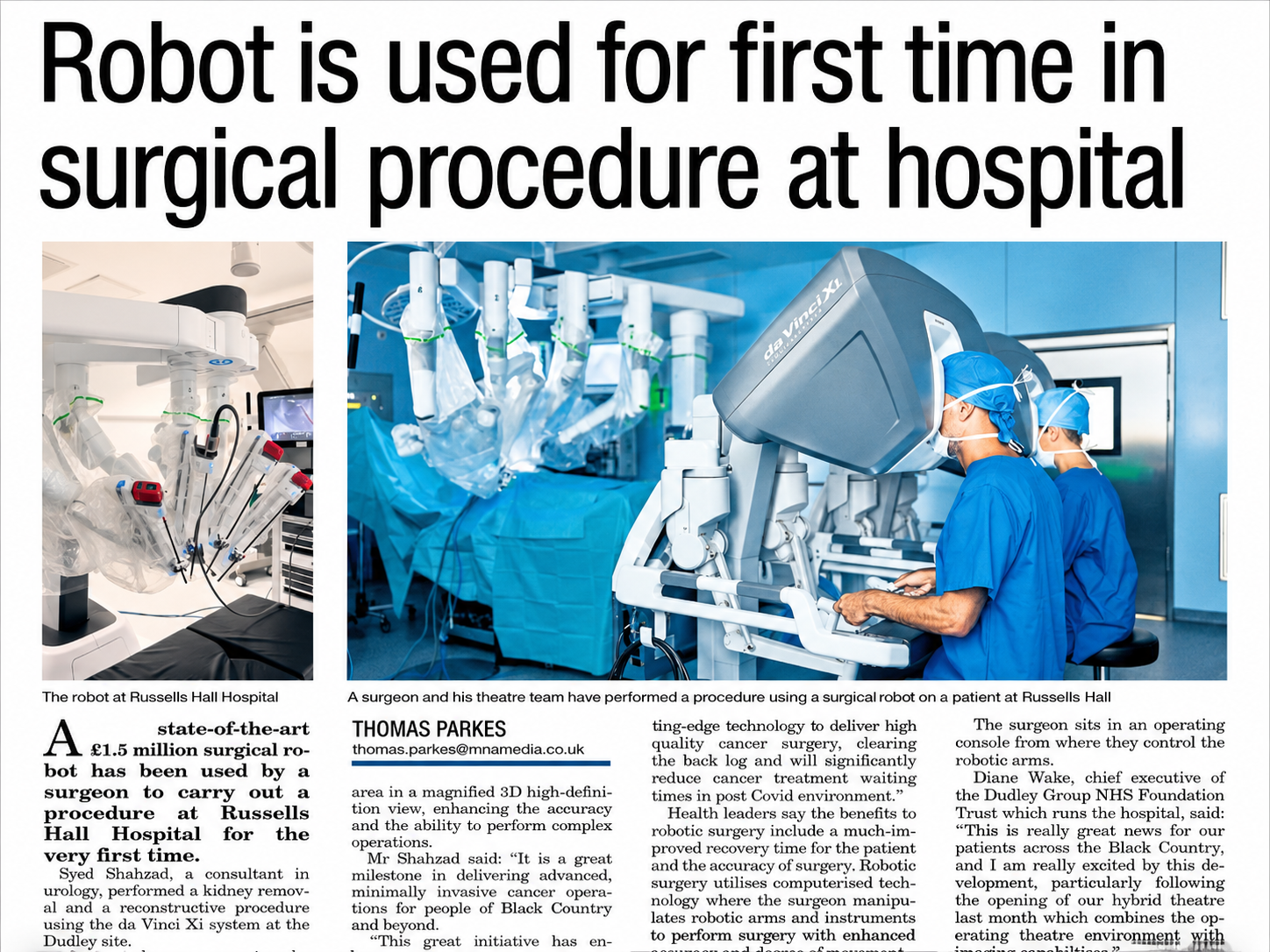
Robotic surgery experience
Featured for a robotic surgery first at Russells Hall Hospital
Mr Shahzad was featured in local news coverage after performing the first robotic surgical procedure at Russells Hall Hospital. The article described use of the da Vinci Xi robotic system for kidney removal and reconstructive surgery.
Robotic surgery is discussed only where it is clinically suitable after imaging review, diagnosis and consultant assessment.
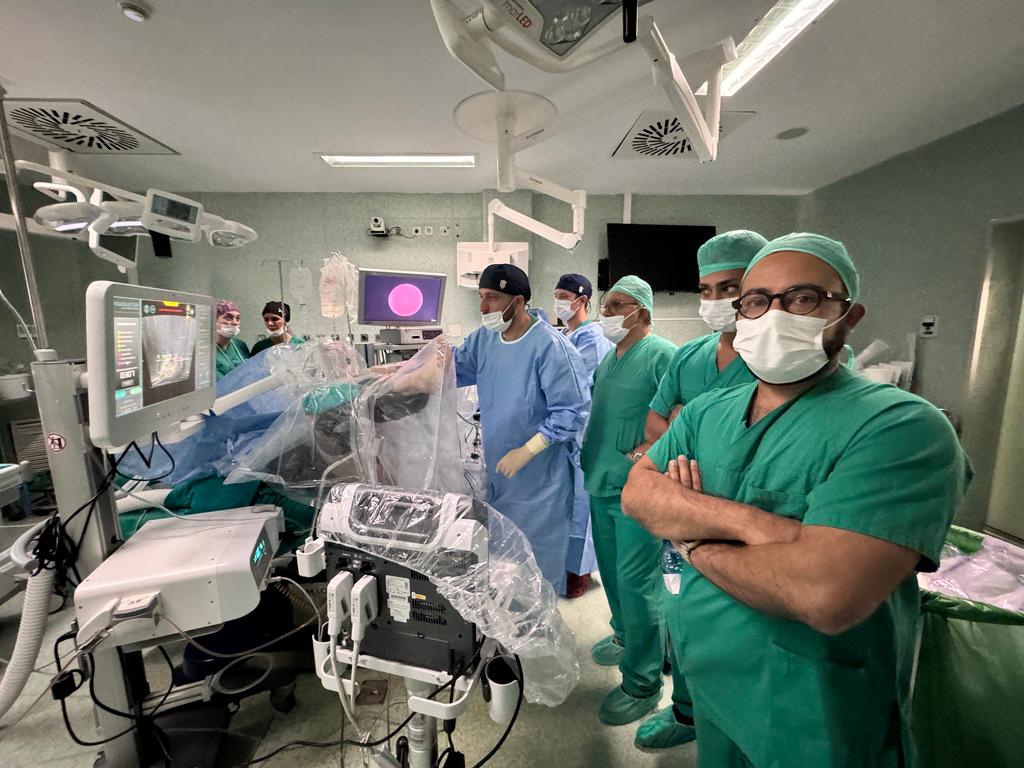
Robotic urology
Robotic surgery experience in specialist theatre settings
Robotic procedures are planned after consultant assessment, imaging review and a clear discussion of whether a minimally invasive approach is suitable for the individual patient.
Book a private consultation
Self-pay and insured patients are welcome. Initial consultations start from £200; investigations and treatment are quoted separately. No GP referral is needed for self-pay appointments. Insured patients should check referral and authorisation requirements.
Contact Yasmin Khan to arrange an appointment · 07866 009874 · Fees and insurance
General patient information. Your clinician will explain suitability, alternatives, risks and follow-up for your circumstances.