

PSA context
PSA is interpreted alongside age, symptoms, history, examination and previous results.
Private prostate cancer care Birmingham
Raised PSA or prostate cancer concern may lead to further tests such as prostate MRI and biopsy. The pathway should be explained clearly so patients understand why each test is being considered.
PSA is interpreted alongside age, symptoms, history, examination and previous results.
MRI can help identify areas of concern and guide whether biopsy is needed.
Biopsy may be recommended when results suggest tissue diagnosis is needed.
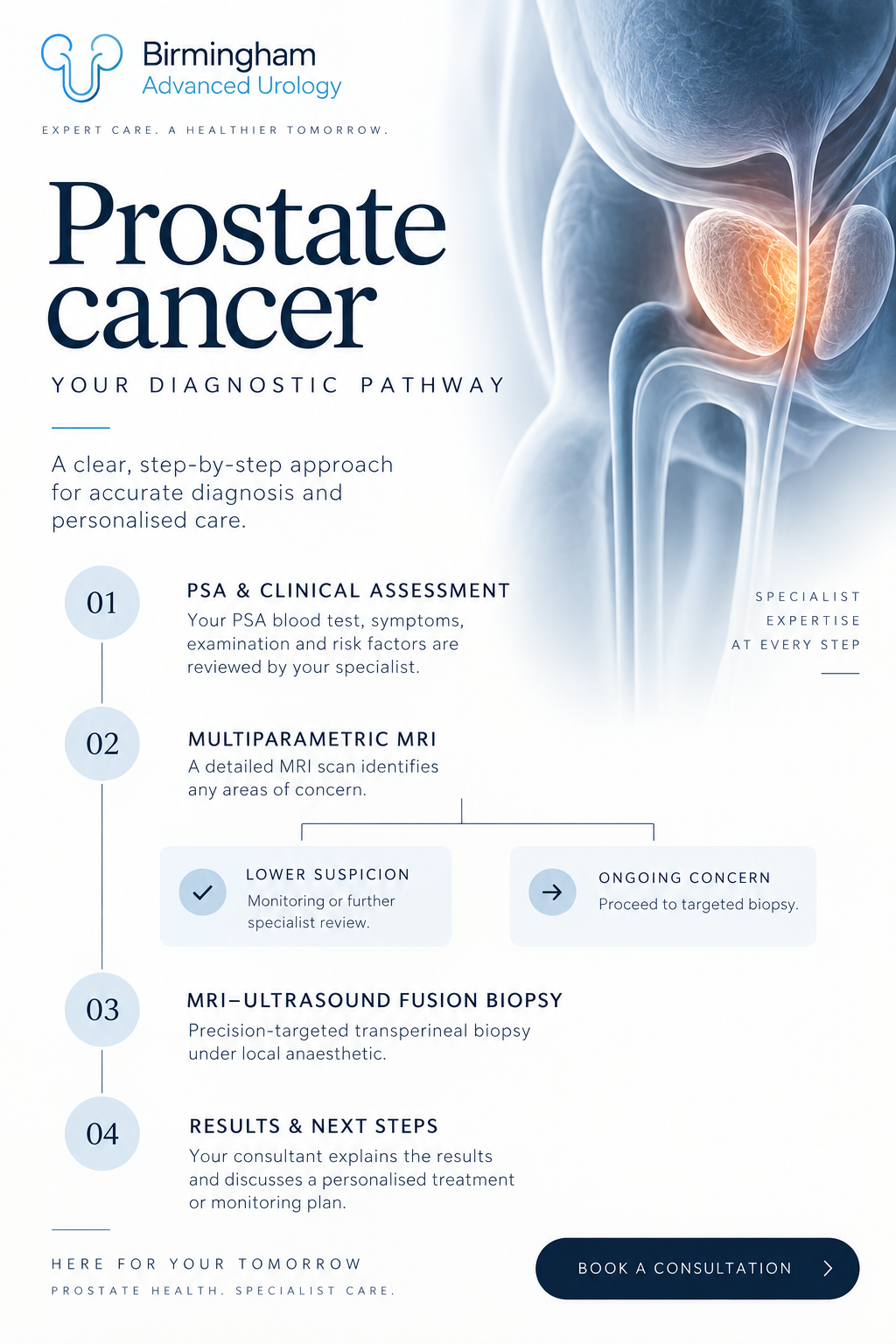
A raised PSA is often the starting point, but it is not a diagnosis. Prostate MRI and biopsy decisions depend on the overall risk picture. Mr Shahzad can explain why tests are being recommended and what the results may mean.
The aim is to investigate significant cancer without overreacting to every PSA result. Patients should understand what each test can show, its limitations and what happens after results are available.
Seek urgent medical help through NHS 111, your GP, A&E or emergency services if you cannot pass urine, have severe pain, fever with urinary symptoms, heavy bleeding or feel very unwell.
No. Some patients may need repeat PSA testing or MRI first. Biopsy is discussed when the overall assessment suggests it is needed.
MRI can identify areas of the prostate that may need closer assessment and can help guide biopsy decisions.
Yes. Private review can be requested to help understand results and next steps.
About the author: This page is written and clinically reviewed by Mr Syed Ali Shahzad, a private consultant urologist in Birmingham. Book a private consultation to discuss your symptoms and treatment options.