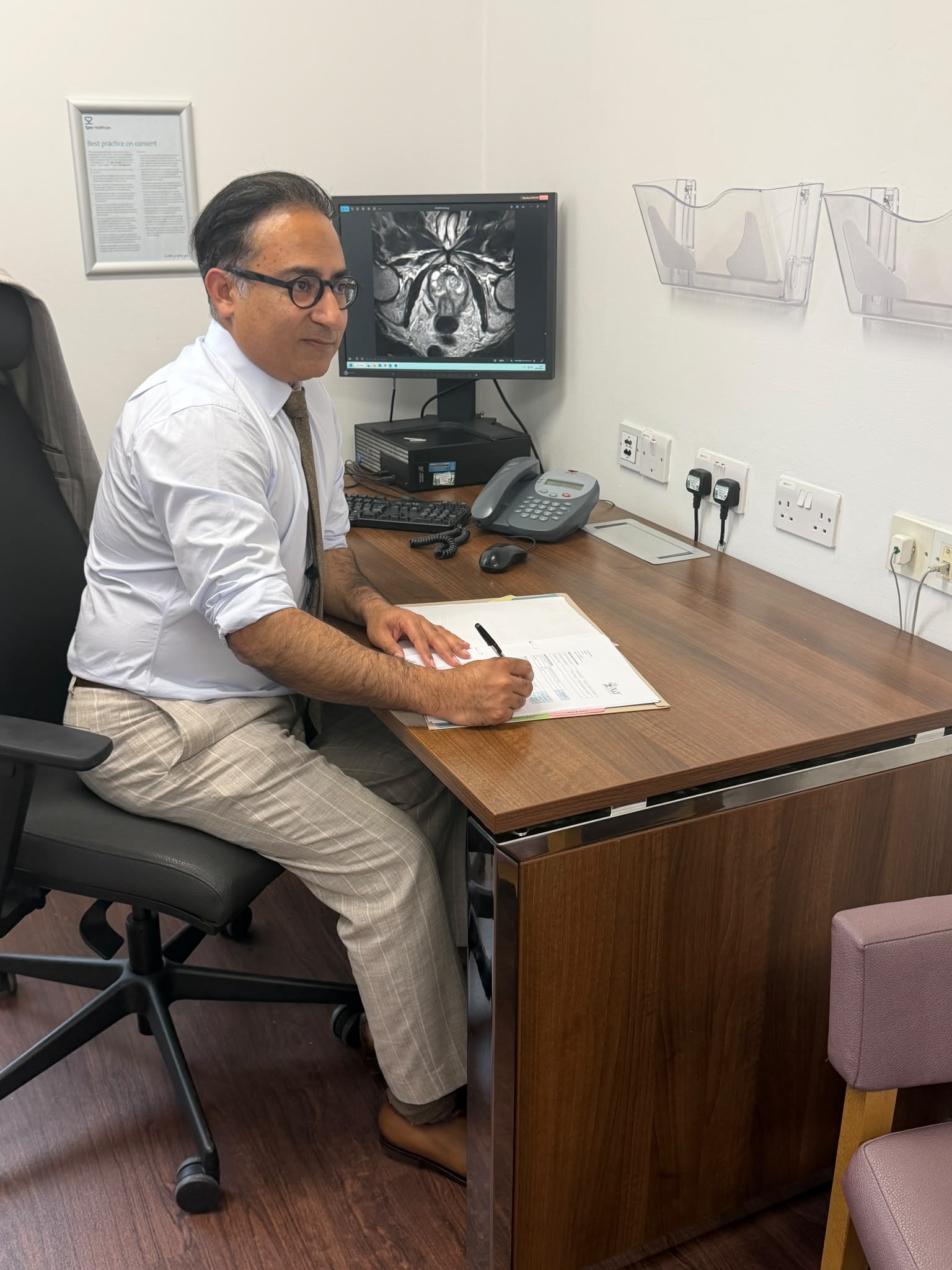

“It’s probably nothing” — when to actually see a urologist

“It's probably nothing” — when to actually see a urologist
Most urinary or men's health symptoms turn out to have straightforward explanations. But “it's probably nothing” is a guess, not an assessment, and a small number of symptoms are worth checking properly rather than waiting out.
Quick answer
Blood in the urine, even a single episode, always warrants assessment. So do new urinary symptoms that persist beyond a couple of weeks, unexplained testicular pain or swelling, and any symptom that is getting steadily worse rather than settling.
Why 'probably nothing' isn't the same as 'checked and fine'
Many urological symptoms are genuinely minor. But the only way to know that for certain is assessment, not assumption. Conditions from infections to prostate or bladder concerns can share very similar early symptoms, and the right next step differs for each.
Assessment doesn't have to mean an alarming process. A first consultation is usually a conversation, a focused examination where appropriate, and a clear plan, often with same-visit reassurance for the majority of patients.
Symptoms worth not ignoring
Blood in the urine (visible or picked up on a dipstick test), a new lump or change in the testicles, persistent changes in urinary flow or frequency, and pelvic or flank pain that doesn't settle are all reasonable prompts to book an assessment.
Key points
- Blood in the urine should always be assessed, even after a single episode.
- A testicular lump or swelling is usually straightforward to check and rarely something to sit on.
- Symptoms that are steadily worsening are a stronger prompt to be seen than symptoms that are stable.
- A first consultation is designed to reach a clear answer, not to escalate unnecessarily.
Ready to talk to a consultant urologist?
Private consultant-led appointments in Birmingham and the West Midlands. Self-pay and insured patients welcome; no GP referral needed for self-pay.
Book a private consultation ›Common questions
Is blood in urine always serious?
Not always, but it should always be checked. Causes range from infection to more significant conditions, and assessment is the only way to tell which.
What if my symptoms come and go?
Intermittent symptoms are still worth mentioning at assessment. Patterns over time are useful clinical information, not something to wait until they're constant.
How quickly can I be seen privately?
Short-notice appointments may be available, subject to hospital and clinical availability. Self-pay patients generally don't need a GP referral to book directly.

Mr Syed Ali Shahzad
Consultant Urological and Robotic Surgeon · GMC 6071731 · FRCS Urol, FEBU · Full profile ›
General information only. It should not replace personalised advice from a qualified clinician. Last updated 12 July 2026.