

Prostate care · Patient guide
Aquablation: how it compares, and what recovery is really like
A plain-language guide to Aquablation therapy for an enlarged prostate – how it compares with TURP, HoLEP, Rezum, UroLift and PAE, and what to expect in the days and weeks afterwards.
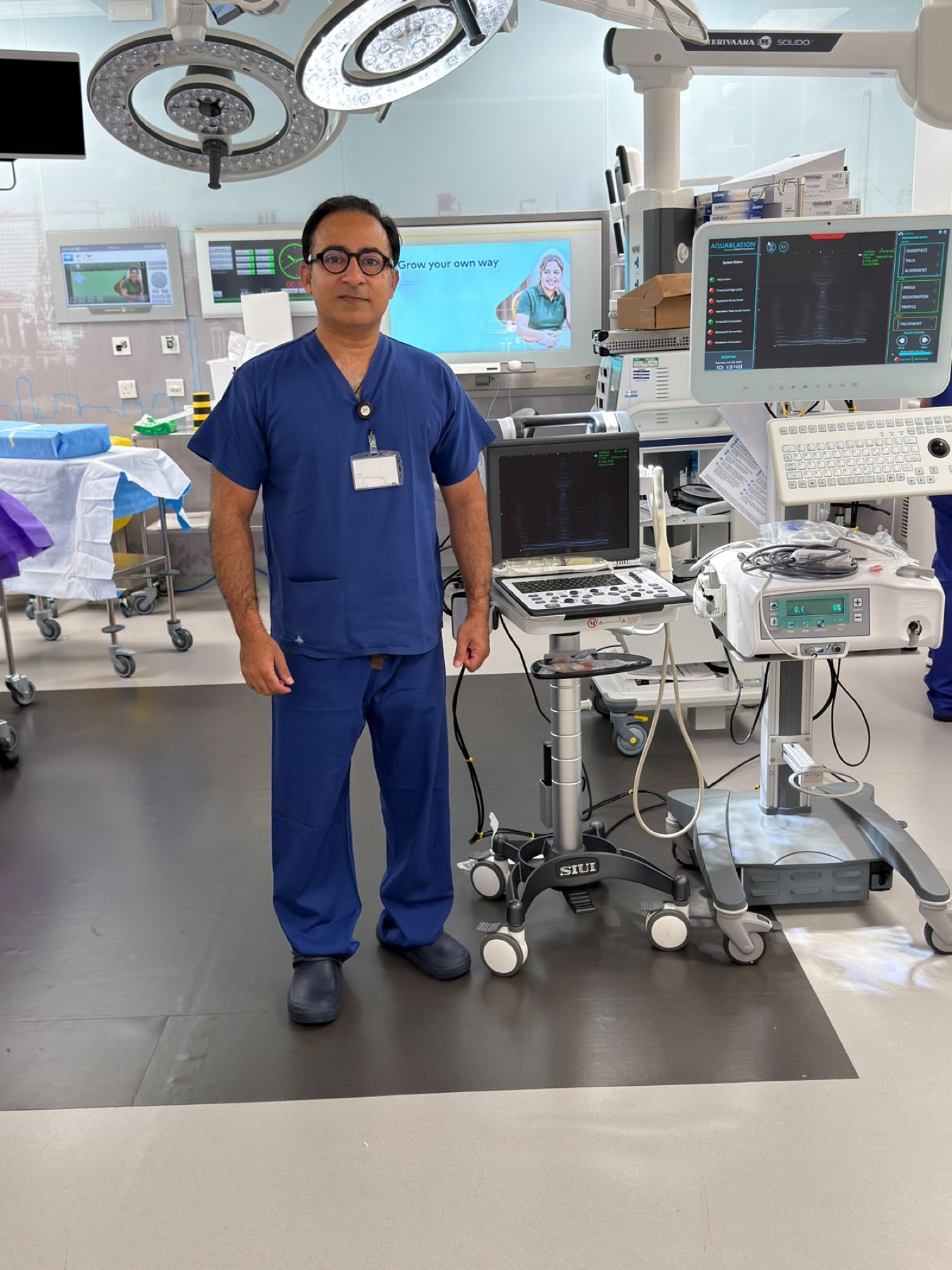
For urgent or last-minute appointment enquiries, contact Yasmin Khan, secretary to Mr Syed Ali Shahzad, so availability can be checked quickly. Timing is subject to hospital and clinical availability.
Why compare
Several good options exist
The right treatment depends on prostate size and shape, symptoms, other health conditions, and what matters most to you – including sexual function.
Aquablation in brief
Robot-guided, heat-free
A waterjet treatment used across a wide range of prostate sizes, associated with high rates of preserved sexual function.
Balanced advice
Not one-size-fits-all
Mr Shahzad explains which options genuinely suit you after assessment, rather than recommending the same procedure for everyone.
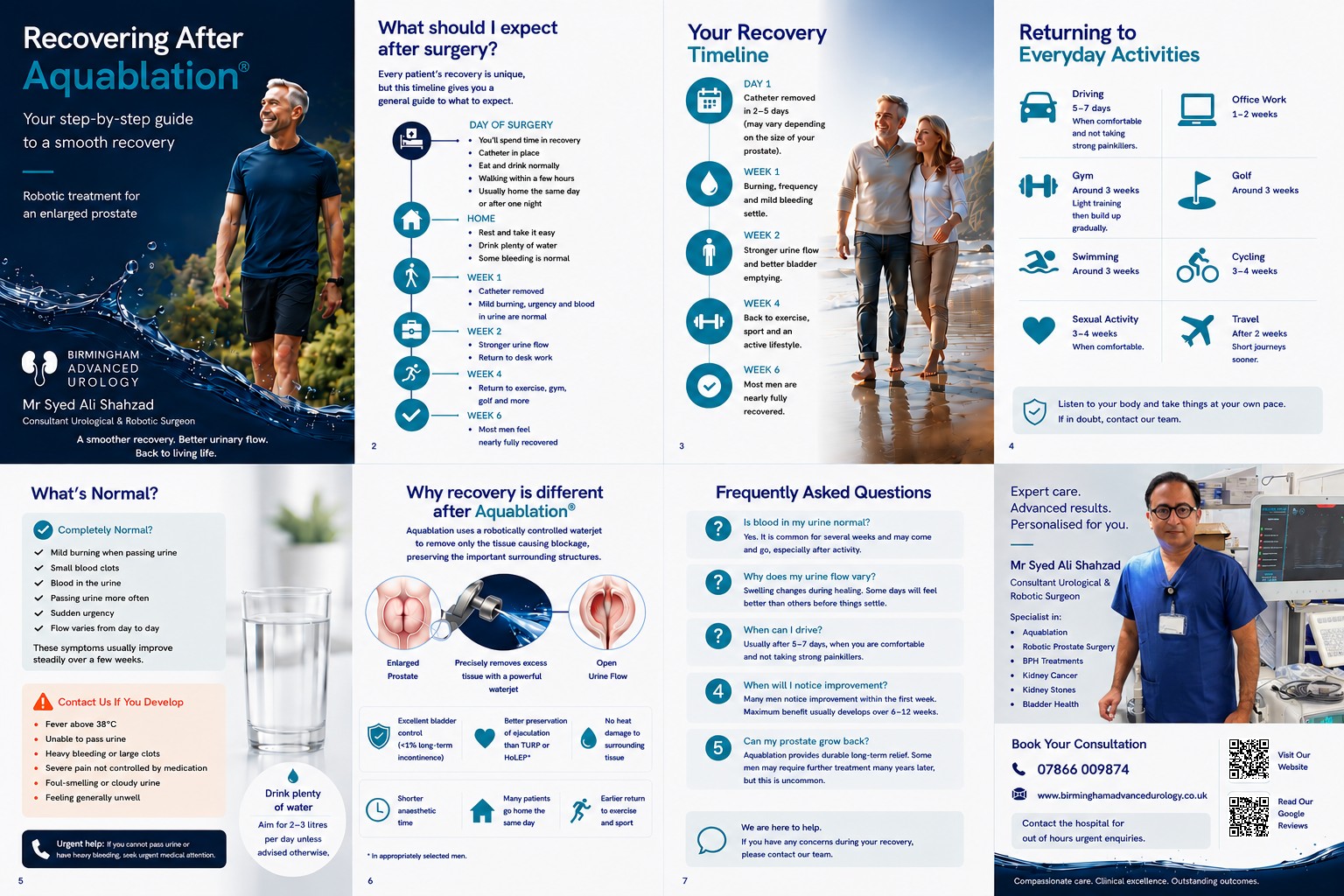
Download: Recovering After Aquablation
Our free patient guide covers what to expect after surgery, your week-by-week recovery timeline, returning to everyday activities, and answers to the questions we hear most.
Patient video · 1 minute 51 seconds
Watch: your Aquablation recovery, week by week
A clear overview of hospital recovery, catheter care, expected urinary symptoms, returning to everyday activities and when to seek urgent medical help.
Recovery varies between patients. Follow your own discharge instructions and contact your clinical team if you are concerned.
Comparing BPH treatment options
A side-by-side look at recovery, bladder control, and sexual function across the main treatment options for an enlarged prostate.
| Treatment | Recovery | Urinary continence | Sexual function & ejaculation | Best suited for |
|---|---|---|---|---|
| Aquablation | Fast recovery. Many men return to office work in 1–2 weeks, with an earlier return to exercise and sport. Many patients can go home the same day or after one night. | Excellent preservation of bladder control. Long-term urinary incontinence is uncommon (<1%). | Erections are usually unaffected. Better chance of preserving normal ejaculation than TURP and HoLEP in appropriately selected men. | Small, medium and large prostates, including many larger glands. |
| TURP | Usually 2–4 weeks before returning to normal activities. | Good long-term bladder control, although temporary leakage may occur during recovery. | Erections can be at risk and dry ejaculation is common. | Medium-sized prostates. |
| HoLEP | Usually 1–2 weeks before returning to work. | Risk of short term incontinence with temporary leakage is more common during early recovery and in some instances long term symptoms can occur. | Erections can be at risk and dry ejaculation is very common. | Medium and large prostates. |
| Rezum | Light activities within days, but full improvement develops over 2–3 months. | Bladder control is usually preserved. | Ejaculation and erections are usually preserved. | Smaller to medium prostates. |
| UroLift | Most men return to normal activities within a few days. | Bladder control is preserved. | Ejaculation and erections are usually preserved. | Selected smaller prostates. |
| PAE | Recovery within days, although improvement develops gradually over weeks to months. | Bladder control is generally preserved. | Ejaculation and erections are usually preserved. | Selected patients, particularly those unsuitable for surgery. |
Every prostate is different. This table is a general guide – the right option depends on prostate size, symptoms, and personal priorities.
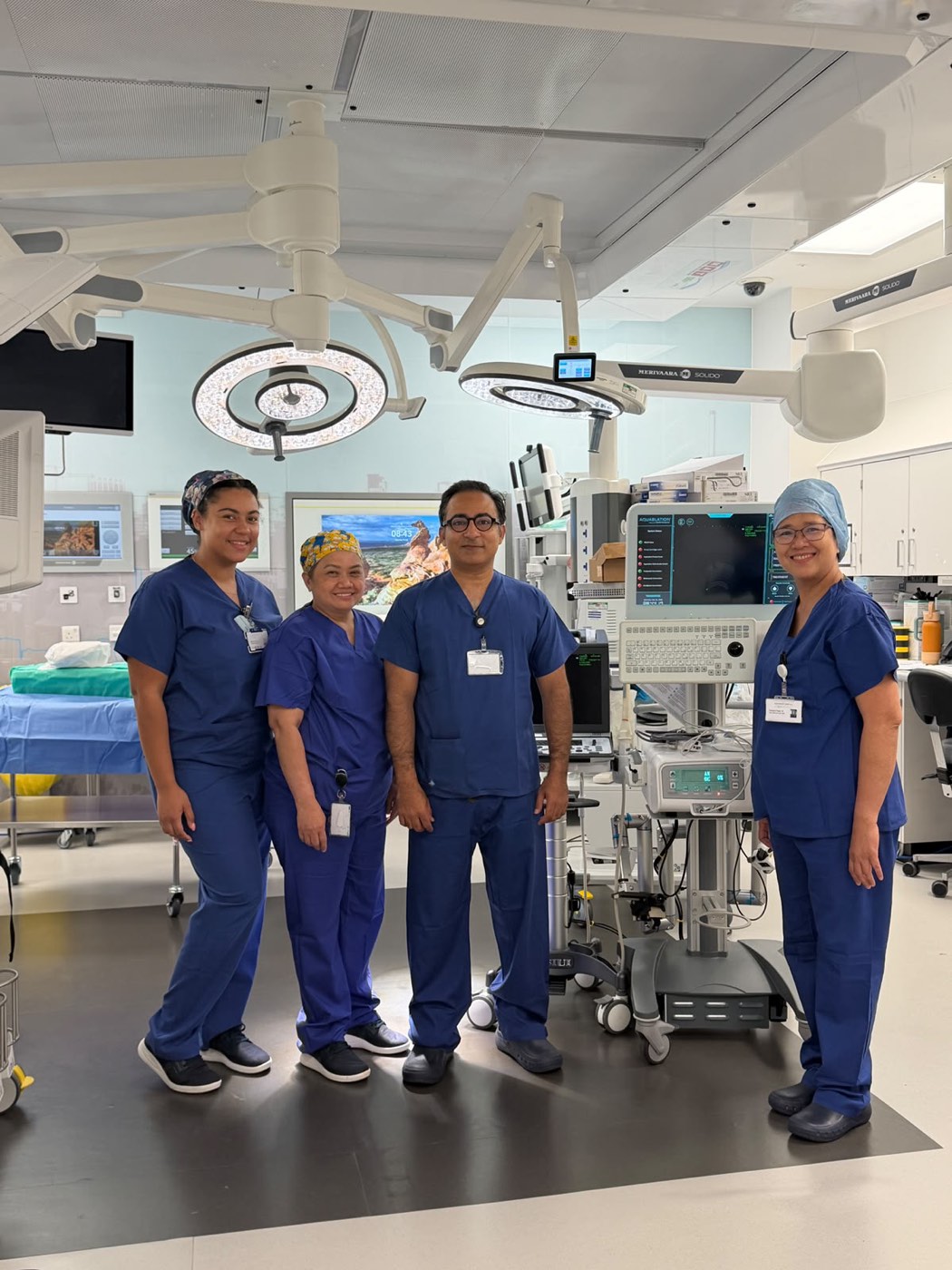
Preparing for a day-case Aquablation procedure using the robotic waterjet system.
Recovery after Aquablation: your questions answered
These are the questions patients most commonly ask after Aquablation treatment. Timings below are typical ranges from clinical experience – your own recovery can be faster or slower depending on your prostate size, the amount of tissue treated, your general health, and how closely post-procedure advice is followed. Always follow the specific instructions given by your own care team.
1 When will my urine flow improve?
Many men notice their flow starting to improve within the first week or two, as initial burning, frequency and mild bleeding settle. Flow tends to get stronger and bladder emptying improves further from around week 2. The maximum benefit to your symptoms usually develops over 6-12 weeks, as healing continues.
2 When can I drive?
Most men can drive again after around 5-7 days, once they feel comfortable, have full control of the vehicle, and are no longer taking strong painkillers.
3 When can I return to physical activity?
Gentle walking is encouraged from within a few hours of treatment to aid recovery. Office-based work is usually manageable within 1-2 weeks. More active pursuits, such as the gym, golf and swimming, are usually fine to ease back into from around 3 weeks, starting light and building up gradually, with cycling from around 3-4 weeks. Most men are back to a fully active lifestyle, including exercise and sport, by around week 4.
4 When should bleeding stop?
Blood in the urine (haematuria), including small clots, is a normal and expected part of recovery, and can vary from day to day – often more noticeable after activity. These symptoms usually improve steadily over the following weeks as the treated area heals. Heavy bleeding, large clots, or an inability to pass urine is not expected and should be checked urgently.
5 How long does discomfort last?
Mild burning, urgency or discomfort when passing urine is common in the first week or two while the treated area heals. Urine flow itself can also vary from day to day during this time as swelling settles – some days will feel better than others before things stabilise. Discomfort that is severe, worsening, or accompanied by fever should be reported to your care team.
6 How long does full healing take?
Most men feel nearly fully recovered by around week 6. That said, the maximum benefit to your urinary symptoms usually continues to develop over 6-12 weeks, as the treated tissue continues to settle.
7 When can sexual activity resume?
Most men are advised to wait around 3-4 weeks before resuming sexual activity, and to be guided by their own comfort. One of the recognised benefits of Aquablation is better preservation of ejaculatory function compared with TURP or HoLEP – a priority for many patients choosing between treatments.
8 What happens when the catheter is removed (TWOC)?
Most men go home with a catheter, usually removed within 2-5 days depending on your individual recovery and prostate size, in a “trial without catheter” (TWOC). You’re asked to drink normally and pass urine yourself, then a quick, painless bladder scan checks how much urine is left behind. If a significant amount is left behind, or you can’t pass urine at all, the catheter may need to stay in a little longer.
Common questions
Is Aquablation better than TURP, HoLEP or the other options?
No single treatment is automatically best for every patient. Aquablation is associated with high rates of preserved sexual function across a wide range of prostate sizes, but the most suitable treatment for you depends on your anatomy, symptoms, other health conditions and personal priorities.
Will I definitely need a catheter?
Most men have a short-term catheter after Aquablation, usually removed within a few days. Some less invasive options, such as UroLift, often avoid the need for a catheter altogether – this can be discussed at consultation.
Can my prostate grow back?
Aquablation provides durable long-term relief for most men. In some cases, further treatment may be needed many years later, but this is uncommon.
Can I discuss Aquablation and these alternatives privately in Birmingham?
Yes. Private assessment can be requested through Yasmin Khan, with the most suitable option discussed after consultant review. No GP referral is required for self-pay patients.